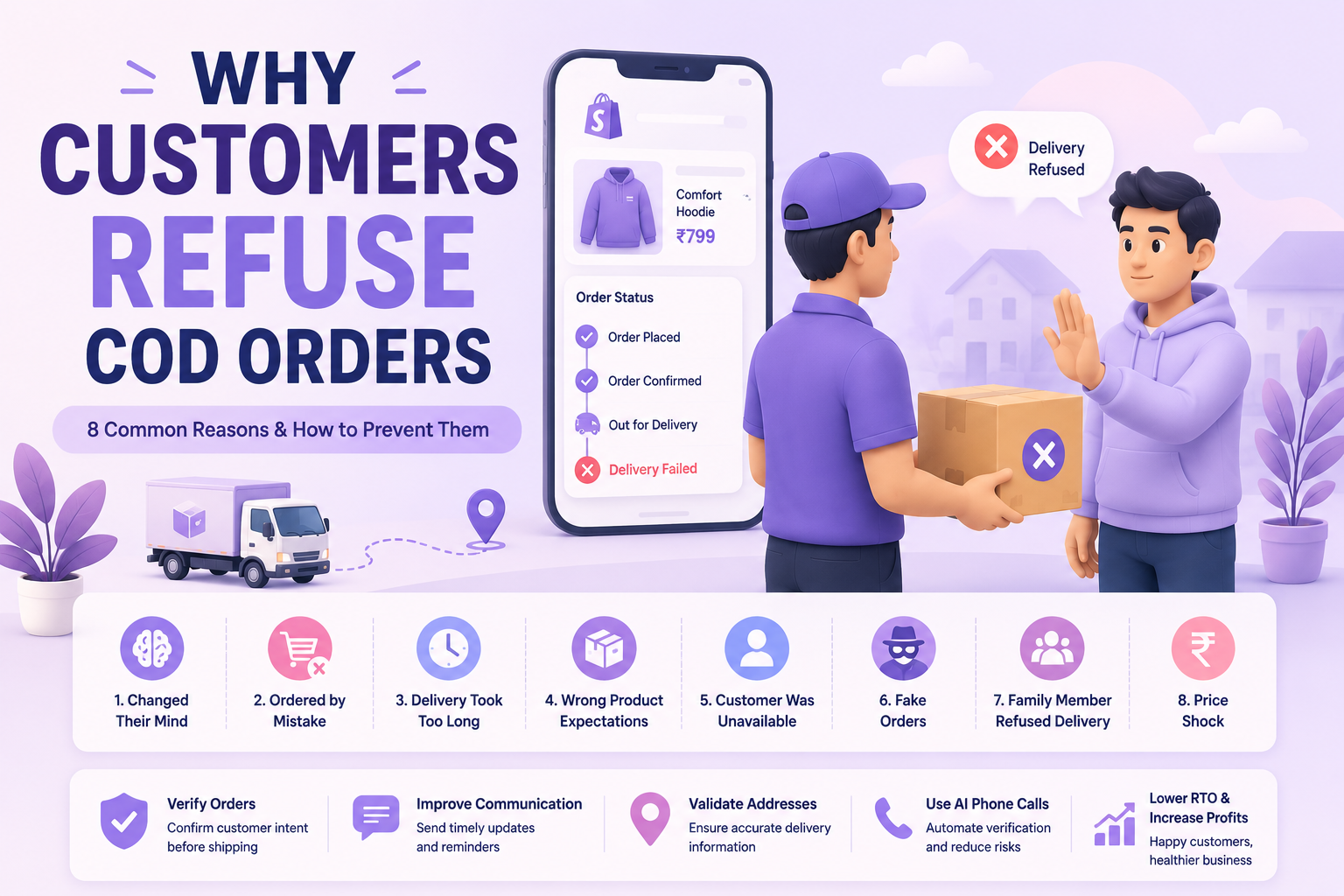
Why Customers Refuse COD Orders (And How to Prevent It)
Why Customers Refuse COD Orders (And How to Prevent It)
Customer refused delivery.
It’s one of the most frustrating notifications a Shopify merchant can receive.
Not only does a refused COD order result in lost revenue, but it also increases shipping costs, Return-to-Origin (RTO) charges, and operational overhead. Understanding why customers refuse COD orders is the first step toward reducing delivery failures and improving profitability.
If you’ve already read our guides on How to Reduce RTO in Shopify Stores and How to Stop Fake COD Orders, you’ll know that many delivery refusals can be prevented with the right verification and communication processes.
In this guide, we’ll explore the most common reasons customers refuse COD orders and how Shopify merchants can prevent them.
What Happens When a Customer Refuses Delivery?
When a customer refuses a COD order, the merchant often pays for:
- Forward shipping charges
- Return shipping charges
- Packaging materials
- Order processing costs
- Customer support time
The product is then returned to the warehouse, creating additional delays and inventory management challenges.
For stores processing hundreds of COD orders each month, these costs can quickly add up.
Why Customers Refuse COD Orders
1. They Changed Their Mind
Many customers place orders impulsively and later decide they no longer want the product.
This is especially common during sales, promotions, and late-night purchases.
How to Prevent It
- Send order confirmation messages immediately
- Verify high-risk orders before shipping
- Provide clear product information
2. Delivery Took Too Long
Customers may find the same product elsewhere or lose interest while waiting for delivery.
Long delivery timelines often increase refusal rates.
How to Prevent It
- Set realistic delivery expectations
- Share tracking updates
- Notify customers about delays proactively
3. The Order Was Placed by Mistake
Accidental orders happen more often than many merchants realize.
Examples include:
- Children placing orders
- Duplicate orders
- Accidental checkout submissions
How to Prevent It
- Use order confirmation workflows
- Verify COD orders before dispatch
4. The Customer Was Unavailable
Sometimes the customer simply isn’t available when the delivery arrives.
This often leads to multiple delivery attempts and eventual returns.
How to Prevent It
- Send delivery reminders
- Confirm availability before shipping
- Verify delivery details
5. Incorrect or Incomplete Addresses
Address errors are a major cause of failed deliveries.
Examples include:
- Missing house numbers
- Incorrect postal codes
- Incomplete landmarks
How to Prevent It
- Validate addresses during checkout
- Verify delivery information before fulfillment
6. Fake Orders
Some orders are placed without any intention of accepting delivery.
These may include:
- Prank orders
- Competitor abuse
- Fraudulent purchases
How to Prevent It
- Verify customer intent
- Use phone verification
- Flag suspicious orders
7. Family Members Refused the Delivery
This is surprisingly common for COD orders.
A family member may:
- Be unaware of the order
- Refuse to make payment
- Believe the delivery is fraudulent
How to Prevent It
- Confirm orders directly with the customer
- Send order notifications through multiple channels
8. Price Shock at Delivery
Customers sometimes forget the order value or are surprised by the final amount due.
How to Prevent It
- Clearly display pricing
- Send order summaries
- Confirm total payment during verification
Warning Signs of a High-Risk COD Order
Certain orders are more likely to be refused.
Watch for:
- Invalid phone numbers
- Incomplete addresses
- Unusually large order values
- Multiple orders from the same customer
- Frequent order cancellations
Identifying these signals early can help reduce delivery failures.
How to Prevent Customer Refusals of COD orders
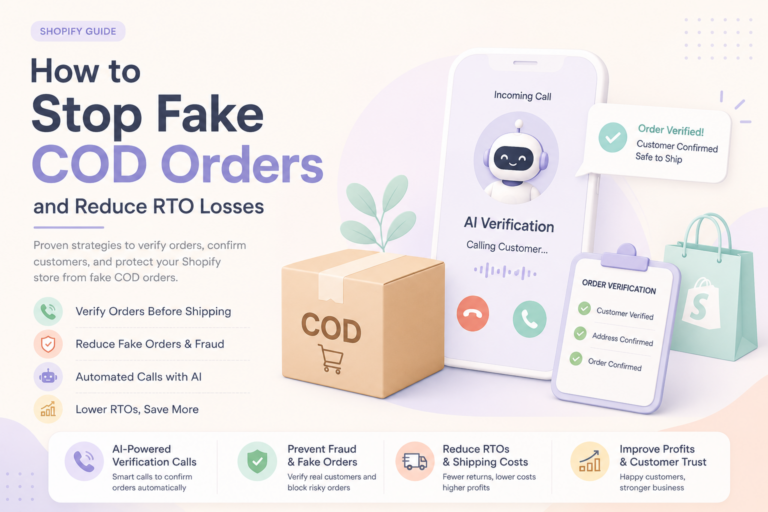
Verify Orders Before Shipping
Customer verification remains one of the most effective ways to reduce refusals.
Methods include:
- Phone calls
- OTP verification
- WhatsApp confirmation
- AI-powered verification calls
Improve Customer Communication
Keep customers informed throughout the order lifecycle.
Send:
- Order confirmations
- Shipping notifications
- Delivery reminders
Validate Addresses
Address verification helps prevent failed deliveries caused by incorrect information.
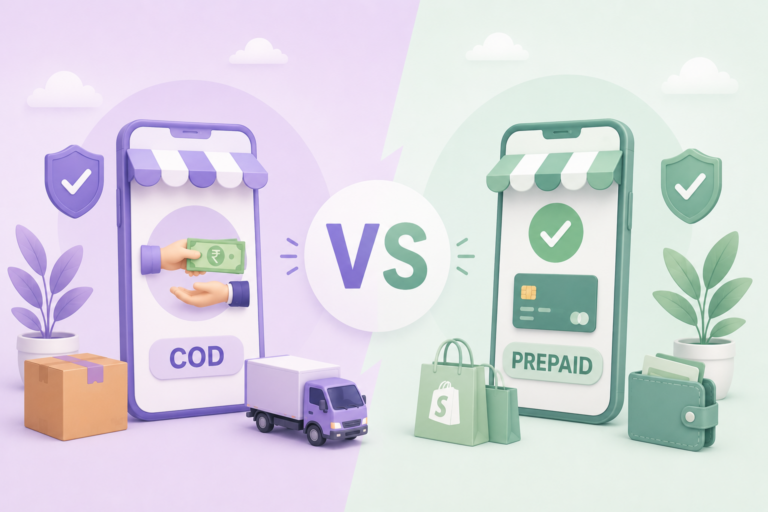
Encourage Prepaid Orders
Prepaid customers are generally more committed to receiving their orders.
Consider offering:
- Discounts
- Free shipping
- Loyalty rewards
Monitor Refusal Trends
Track:
- Refusal rates
- RTO rates
- Verification success rates
- Common failure reasons
This data can reveal patterns and opportunities for improvement.
How Jaxl Business Phone Helps Reduce Delivery Refusals
Many Shopify merchants manually call customers to confirm COD orders.
Jaxl Business Phone automates this process using AI-powered phone calls.
The system can:
- Verify customer intent
- Confirm order details
- Validate delivery addresses
- Identify suspicious orders
- Reduce fake COD orders
- Lower delivery refusal rates
By confirming orders before shipment, businesses can improve delivery success while reducing operational workload.
Additional Resources
Want to learn more about reducing delivery failures?
Check out:
- How to Stop Fake COD Orders
- How Much Do Fake COD Orders Really Cost Your Shopify Store?
- Manual vs Automated COD Verification
- Best COD Verification Tools for Shopify Stores
- How to Reduce RTO in Shopify Stores
Frequently Asked Questions
Why do customers refuse COD orders?
Common reasons include changed minds, delivery delays, incorrect addresses, accidental orders, fake orders, and payment-related issues.
Does COD increase delivery refusal rates?
Yes. COD orders typically experience higher refusal rates compared to prepaid orders because customers have not paid upfront.
How can Shopify stores reduce delivery refusals?
Verification calls, address validation, customer communication, and prepaid incentives can significantly reduce refusal rates.
Are fake orders responsible for most refusals?
Not always. Many refusals are caused by delivery delays, customer unavailability, and purchase regret.
Can AI-powered verification reduce refused deliveries?
Yes. AI-powered verification can confirm customer intent before shipment and help identify high-risk orders.
Conclusion
Customer refusals are one of the biggest contributors to high RTO rates and lost profits for Shopify stores.
By understanding why customers refuse COD orders and implementing proactive verification and communication strategies, merchants can significantly improve delivery success rates.
Even small reductions in refusal rates can result in meaningful savings over time.
Want to Reduce COD Delivery Refusals?
Jaxl Business Phone helps Shopify merchants verify COD orders using AI-powered phone calls before shipment.
✅ Confirm customer intent
✅ Verify delivery details
✅ Reduce fake orders
✅ Lower delivery refusal rates
✅ Improve order fulfillment efficiency