Order Verification: Shopify Best Practices Guide
Shopify Order Verification Best Practices: A Complete Guide
Order verification is one of the most effective ways for Shopify stores to reduce fake orders, lower Return-to-Origin (RTO) rates, and improve delivery success. As order volumes grow, verifying customer intent before shipment becomes increasingly important for protecting profit margins and improving operational efficiency.
If you’ve already read our guides on How to Stop Fake COD Orders, How to Reduce RTO in Shopify Stores, and COD vs Prepaid Orders, you’ll know that many fulfillment challenges can be prevented before an order is shipped.
In this guide, we’ll explore the most effective Shopify order verification best practices and how merchants can build a reliable verification process.
What Is Order Verification?
Order verification is the process of confirming that an order is legitimate before fulfillment begins.
The goal is to verify:
- Customer intent
- Delivery details
- Phone numbers
- Payment information
- Shipping addresses
Verification helps merchants identify risky orders before shipping costs are incurred.
Why Shopify Stores Need Order Verification
Many merchants assume every order is genuine.
Unfortunately, that’s not always the case.
Without verification, stores may experience:
- Fake orders
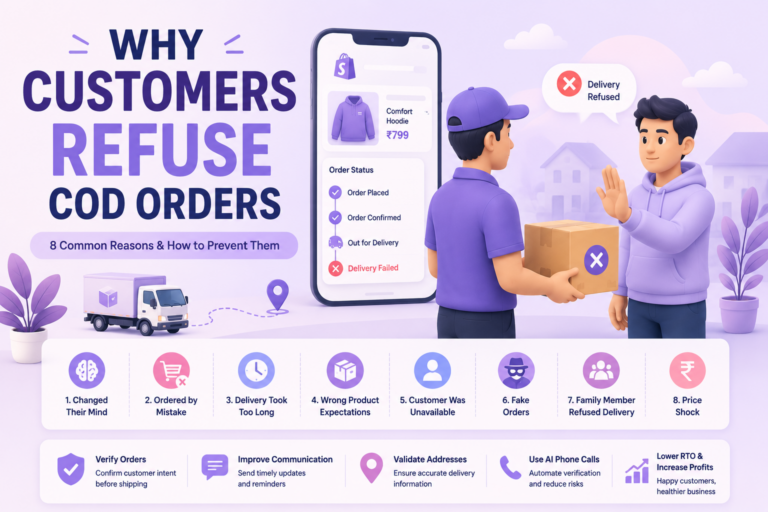
- High RTO rates
- Delivery refusals
- Incorrect addresses
- Customer disputes
A strong verification process helps reduce these risks.
When Should Shopify Stores Verify Orders?
Not every order requires the same level of review.
The following order types often benefit from verification.
COD Orders
Cash on Delivery orders generally carry higher risk than prepaid orders.
High-Value Orders
Expensive purchases deserve additional validation before shipping.
First-Time Customers
New customers may require additional confirmation.
Suspicious Orders
Examples include:
- Incomplete addresses
- Invalid phone numbers
- Multiple orders placed rapidly
- Unusual order values
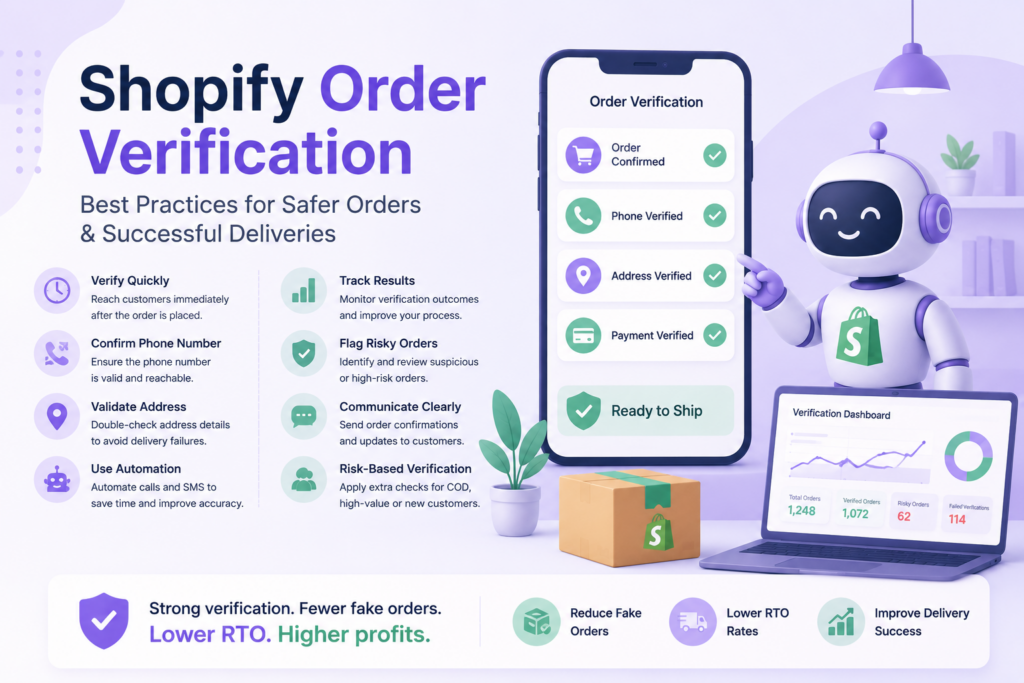
Best Practice #1: Verify Orders Quickly
The sooner verification occurs, the better.
Customers are most responsive immediately after placing an order.
Benefits include:
- Faster issue resolution
- Better customer engagement
- Reduced fulfillment delays
Waiting several days often reduces verification success rates.
Best Practice #2: Confirm Customer Phone Numbers
A valid phone number is one of the strongest indicators of a legitimate order.
Verification methods include:
- Phone calls
- OTP verification
- SMS confirmation
Invalid numbers often indicate higher-risk orders.
Best Practice #3: Validate Shipping Addresses
Address errors are a major cause of failed deliveries.
Verify:
- Postal codes
- City information
- House numbers
- Landmark details
Accurate addresses improve delivery success rates.
Best Practice #4: Use Automated Verification
Manual verification works for smaller stores but becomes difficult to scale.
Automation can:
- Verify orders immediately
- Reduce staff workload
- Improve consistency
- Support higher order volumes
Many growing Shopify stores now automate portions of their verification workflow.
Best Practice #5: Record Verification Outcomes
Tracking verification results helps identify trends.
Useful data points include:
- Verified orders
- Failed verifications
- Unreachable customers
- Refused orders
- RTO rates
Over time, this information can improve decision-making.
Best Practice #6: Flag Repeat Offenders
Some customers repeatedly:
- Refuse deliveries
- Place fake orders
- Cancel after shipment
Maintaining internal records helps reduce future losses.
Best Practice #7: Send Order Confirmation Messages
Customers should receive immediate confirmation after placing an order.
Communication channels include:
- SMS
Clear communication reduces confusion and improves customer confidence.
Best Practice #8: Verify High-Risk Orders Separately
Not all orders require the same verification process.
Consider additional checks for:
- Large order values
- Multiple-item purchases
- Unusual shipping locations
- Previous customer issues
A risk-based approach helps balance efficiency and protection.
Common Order Verification Mistakes
Waiting Too Long
Delayed verification reduces customer response rates.
Relying Entirely on Manual Processes
Manual workflows often become bottlenecks as businesses grow.
Ignoring Verification Data
Merchants should regularly review verification performance and outcomes.
Using a One-Size-Fits-All Process
Different order types require different verification strategies.
How AI Is Changing Order Verification
Modern AI-powered systems allow businesses to verify orders faster and more consistently.
Benefits include:
- Automated customer outreach
- Immediate verification
- Consistent workflows
- Reduced operational workload
- Improved scalability
As order volumes increase, AI-based verification becomes increasingly valuable.
How Jaxl Business Phone Helps Shopify Merchants
Many Shopify merchants spend hours each day manually verifying customer orders.
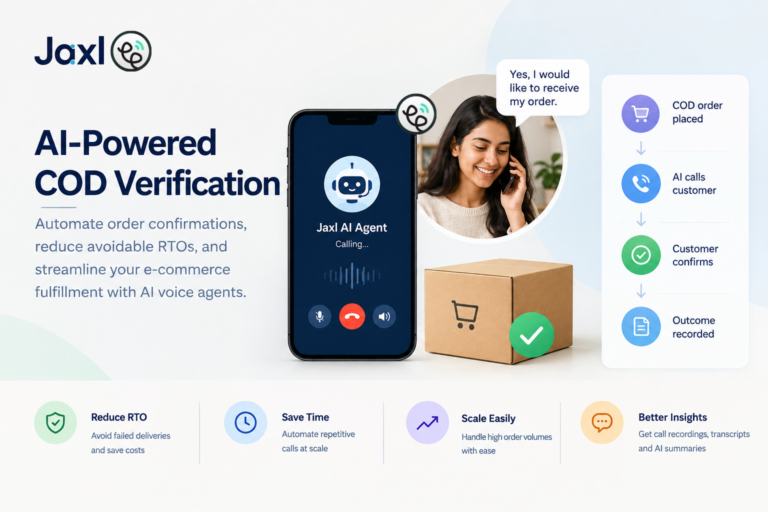
Jaxl Business Phone automates verification using AI-powered phone calls.
The system can:
- Verify customer intent
- Confirm order details
- Validate delivery addresses
- Identify suspicious orders
- Reduce fake orders
- Lower RTO rates
By automating repetitive verification tasks, businesses can focus on fulfillment and customer growth.
Additional Resources
Want to learn more about reducing delivery failures and improving order quality?
Check out:
- How to Stop Fake COD Orders
- How Much Do Fake COD Orders Really Cost Your Shopify Store?
- Manual vs Automated COD Verification
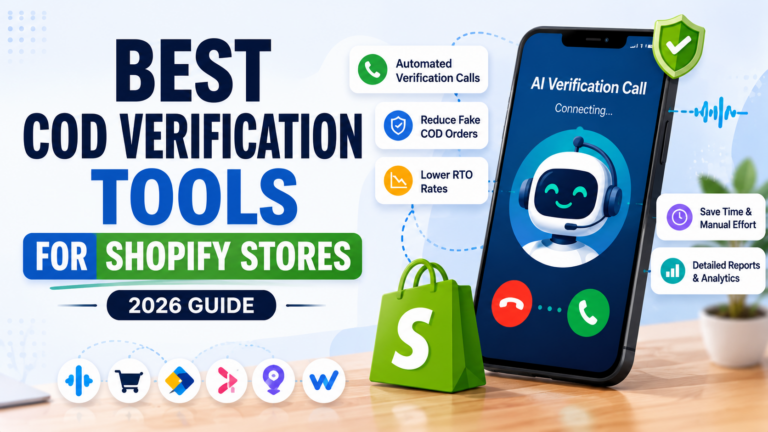
- Best COD Verification Tools for Shopify Stores
- How to Reduce RTO in Shopify Stores
- Why Customers Refuse COD Orders
- COD vs Prepaid Orders: Which Is Better for Shopify Stores?
Frequently Asked Questions
What is order verification?
Order verification is the process of confirming customer intent and validating order information before fulfillment.
Does order verification reduce RTO rates?
Yes. Verifying orders before shipment helps identify fake or risky orders, reducing failed deliveries and RTO shipments.
Should Shopify stores verify every order?
Not necessarily. Many merchants focus on COD orders, high-value orders, and suspicious orders.
What is the best order verification method?
The best method depends on business needs. Common approaches include phone calls, OTP verification, SMS confirmation, and AI-powered verification.
Can AI automate order verification?
Yes. AI-powered systems can automatically contact customers, verify details, and flag suspicious orders.
Conclusion
A strong order verification process can significantly improve profitability for Shopify merchants.
By validating customer intent, confirming delivery information, and identifying risky orders before shipment, businesses can reduce fake orders, lower RTO rates, and improve fulfillment performance.
Whether verification is performed manually or through automation, implementing a structured process is one of the most effective ways to improve operational efficiency.
Looking to Automate Order Verification?
Jaxl Business Phone helps Shopify merchants verify orders using AI-powered phone calls before shipment.
✅ Verify customer intent
✅ Confirm delivery details
✅ Reduce fake orders
✅ Lower RTO rates
✅ Improve fulfillment efficiency